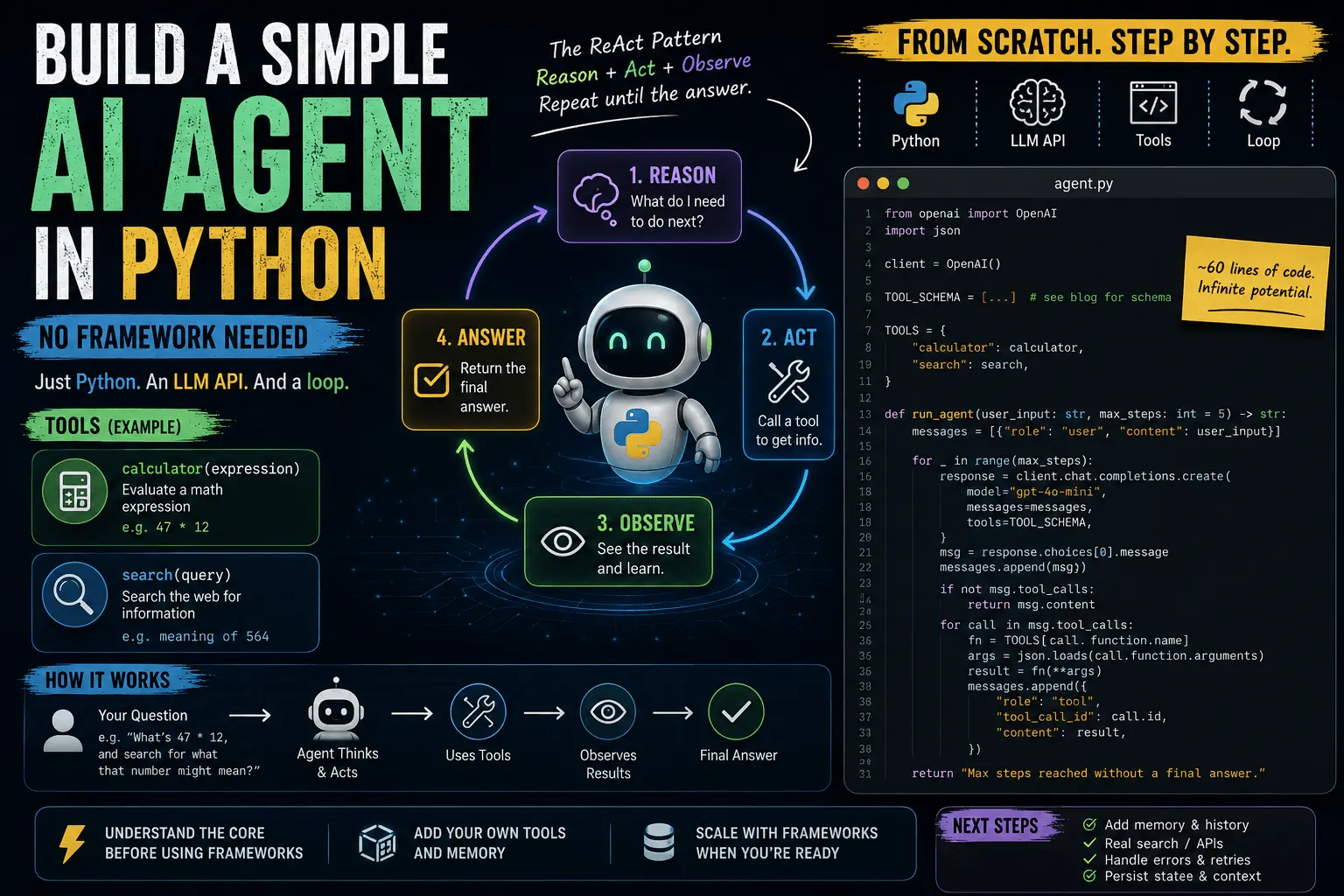
What Is MCP (Model Context Protocol) and Why It Became AI's Most Important Protocol in 2026
Every AI product I use daily — Claude, ChatGPT, Gemini, Copilot, Cursor — quietly picked up support for the same protocol this year, and I kept running into it before I actually understood what it was. I’d see “MCP server” mentioned in a plugin’s README, or a coworker would say “just wire it up over MCP,” and I’d nod along without a clear mental model of what was actually happening under the hood. So I sat down, read the spec, built a couple of toy servers, and this post is the explainer I wish I’d had on day one — no framework lock-in, no assumption you’re already deep in agent tooling, just what MCP is, why it exists, and how the pieces fit together.
What Is MCP (Model Context Protocol) in Plain Terms
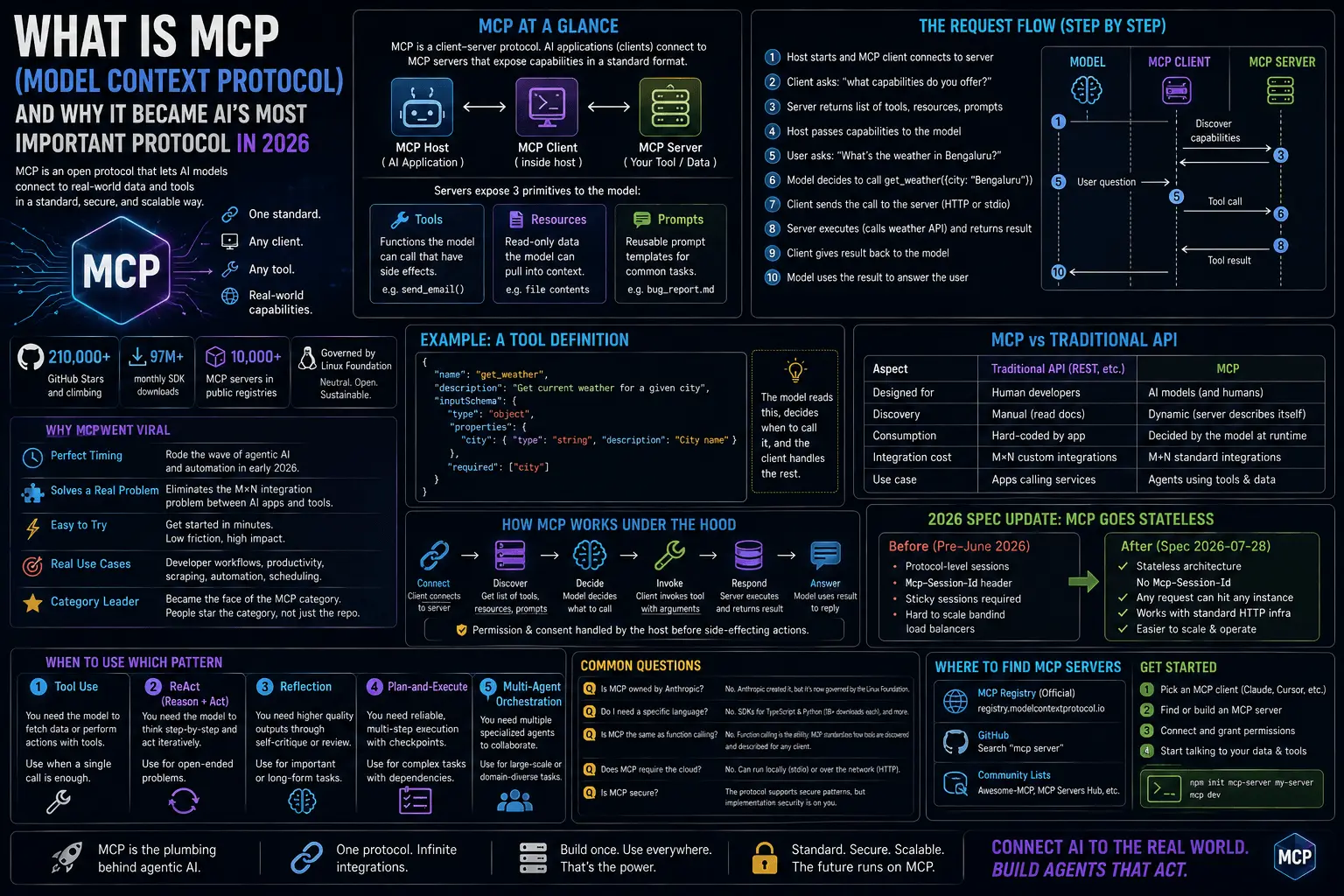
MCP stands for Model Context Protocol. Strip away the acronym and the idea is simple: it’s a standard way for an AI model to reach outside its own context window and touch the real world — your calendar, a database, a file system, an internal company tool, a search API — without every AI vendor and every tool vendor having to hand-build a custom integration for every possible pairing.
Think about the problem MCP solves before MCP existed. If you wanted Claude to read your calendar, someone had to write a Claude-specific calendar integration. If you wanted ChatGPT to do the same thing, that was a separate integration. Multiply that by every AI product on one side and every data source or tool on the other, and you get an M×N explosion of bespoke, one-off connectors. Nobody wants to build the same calendar plugin five times for five different AI assistants.
MCP flips that into an M+N problem. A tool builder writes one MCP server for their calendar, database, or API. Any MCP-compatible AI client — Claude, ChatGPT, Gemini, Copilot, Cursor, or anything else that speaks the protocol — can talk to it immediately. No custom glue code per pairing. That’s the whole insight, and it’s why the protocol spread as fast as it did.
I like to describe MCP as “the plumbing” for AI. The model is smart, but on its own it’s sealed inside a text-in-text-out box. MCP is the pipe that lets it reach a database, call an internal tool, or pull a live document — securely, and through a shape the model already knows how to use.
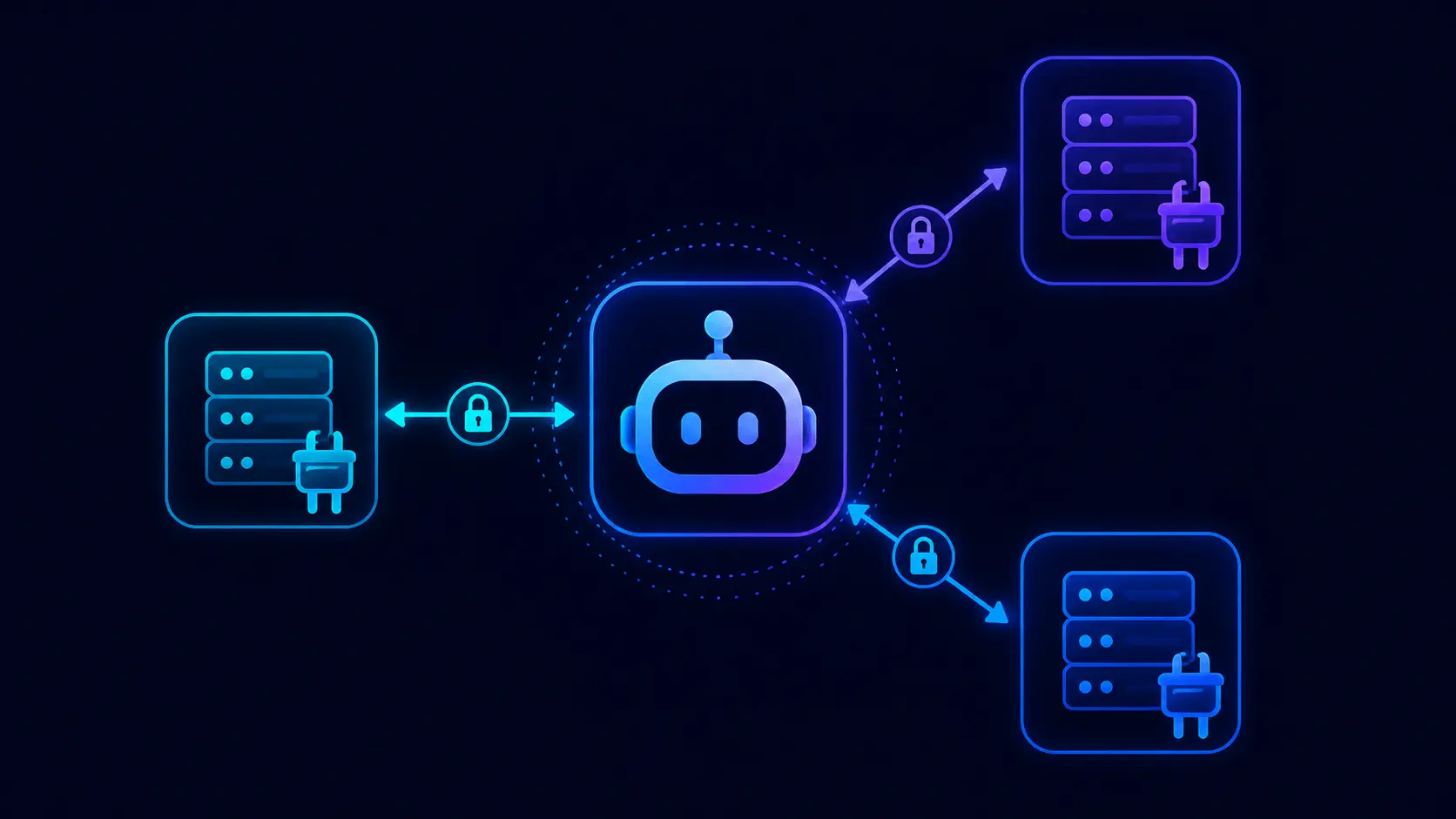
Why MCP Became AI’s Most Important Protocol in 2026
The numbers back up how fast this moved from “interesting idea” to “default infrastructure.” As of 2026, MCP is seeing roughly 97 million monthly SDK downloads. The TypeScript and Python SDKs have each individually crossed 1 billion total downloads. There are more than 10,000 MCP servers indexed across public registries — everything from Slack and GitHub integrations to niche internal tooling that companies built for themselves and open-sourced anyway.
Governance moved under the Linux Foundation, which matters more than it sounds like on the surface. A protocol that’s going to sit underneath enterprise AI infrastructure needs neutral stewardship — no single vendor should be able to unilaterally change the rules once thousands of companies depend on it. That move signaled MCP had graduated from “Anthropic’s thing” to genuine shared infrastructure.
And critically, native support landed inside every major AI product: Claude, ChatGPT, Gemini, Copilot, and Cursor all speak MCP natively now. That’s the tell. When competing AI vendors converge on the same protocol instead of pushing their own proprietary tool-calling standard, it stops being a nice-to-have and becomes the de facto layer everyone builds on. I’ve started treating “does this have an MCP server” the same way I used to treat “does this have a REST API” — a baseline expectation, not a bonus feature.
How MCP Works: The Client-Server Architecture Explained
At its core, MCP borrows a shape you already know from client-server computing, adapted for AI.
- MCP Host — the AI application itself. This is Claude Desktop, an IDE like Cursor, or your own custom agent.
- MCP Client — lives inside the host, maintains a connection to one MCP server, and handles the protocol-level back-and-forth.
- MCP Server — a lightweight program that exposes a specific capability: a database, a file system, a set of APIs, a SaaS product. The server decides what it’s willing to expose and how.
The server exposes its capabilities to the model through three main primitives:
- Tools — functions the model can actively call, like
send_emailorquery_database. These have side effects. - Resources — read-only data the model can pull into context, like a file’s contents or a database record.
- Prompts — reusable prompt templates the server offers, so common workflows don’t have to be reinvented by every client.
Here’s a simplified pseudo-code version of what an MCP tool definition actually looks like on the server side:
{
  "name": "get_weather",
  "description": "Get current weather for a given city",
  "inputSchema": {
    "type": "object",
    "properties": {
      "city": { "type": "string", "description": "City name, e.g. 'Bengaluru'" }
    },
    "required": ["city"]
  }
}
That’s it — a name, a human-readable description the model uses to decide when to call it, and a JSON schema describing the expected input. No magic. The model reads this definition the same way it would read a function signature, decides when it’s relevant, and asks the client to invoke it.
The Request Flow: What Actually Happens When a Model Calls a Tool
Here’s the sequence, stripped to its essentials:
1. Host starts up, MCP client connects to MCP server
2. Client asks server: "what tools/resources do you offer?"
3. Server responds with its list of tool definitions (like the JSON above)
4. Host passes those definitions to the model as available capabilities
5. User asks something the model can't answer from its own knowledge
   e.g. "what's the weather in Bengaluru right now?"
6. Model decides to call get_weather({ "city": "Bengaluru" })
7. Client sends that call to the server over the transport (HTTP or stdio)
8. Server executes the actual logic (hits a weather API), returns the result
9. Client feeds the result back into the model's context
10. Model uses the result to answer the user in natural language
Nothing in that flow is exotic if you’ve built or used any API before. What MCP adds is a standard shape for steps 2 through 4 — the discovery and description phase — so any client can talk to any server without custom code. That standardization is the entire value proposition.
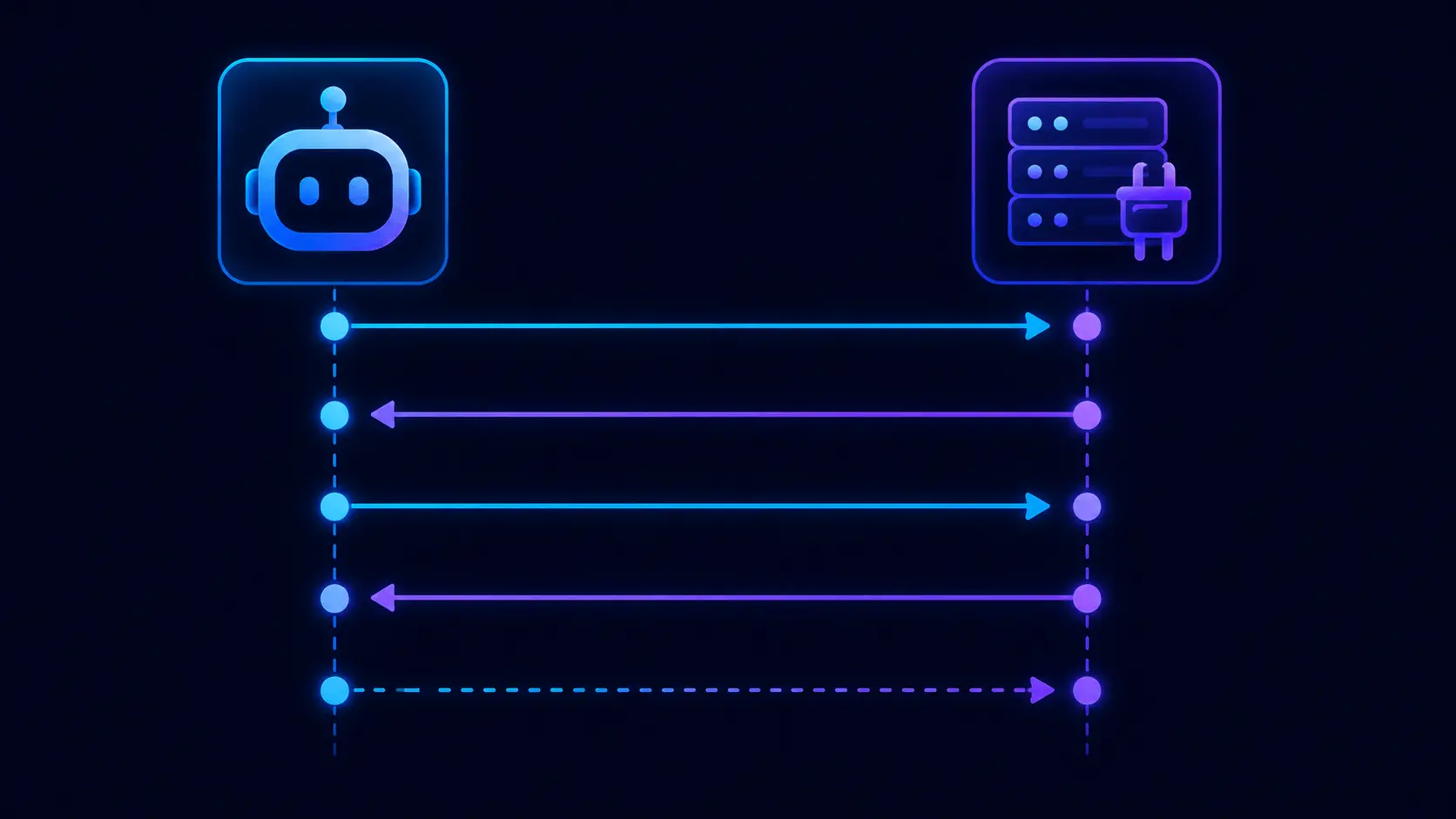
MCP vs Traditional APIs: What’s Actually Different
A question I got asked a lot while explaining this to teammates: “isn’t this just a REST API with extra steps?” Fair question. The difference is who’s the consumer.
A traditional API is designed for a human developer to read documentation, understand the shape of a request, and hard-code a call into an application. MCP is designed for a model to discover capabilities dynamically at runtime, decide autonomously whether and when to use them, and adapt its calls based on the conversation. The server tells the model what’s available and how to use it, in a format the model can reason over directly — no developer sitting in the middle wiring up each specific call ahead of time.
This matters in practice: I can point an MCP-compatible agent at a brand-new server it has never seen, and it figures out what that server can do just by reading the tool descriptions, no code changes needed on my end. Try that with a REST API and you’re writing an integration first.
MCP also standardizes things a bare API doesn’t bother with — a common transport model, a common permissions and consent flow (the host should be asking the user before letting a model take an action with side effects), and a common discovery mechanism. It’s less “an API” and more “an API convention plus a discovery protocol,” purpose-built for how models actually consume tools.
The 2026 Spec Update: MCP Goes Stateless
The most consequential recent change to the protocol landed with the 2026-07-28 MCP specification release, and it’s worth understanding because it directly affects how you’d deploy MCP servers at any real scale.
Earlier versions of MCP had protocol-level sessions — a persistent handshake identified by an Mcp-Session-Id header that a specific server instance would track for the life of a conversation. That works fine for a single developer running a server locally, but it’s a genuine headache in an enterprise deployment. If your MCP server needs to run behind a load balancer with multiple instances, session affinity means requests for a given session have to keep landing on the same instance — sticky sessions, extra infrastructure, more failure modes.
The July 2026 spec removed protocol-level sessions and the Mcp-Session-Id header entirely, moving MCP to a stateless architecture. Now, any request can be answered by any server instance sitting behind ordinary HTTP infrastructure — the same load balancers, the same auto-scaling groups, the same deployment patterns you’d use for any stateless web service. No sticky sessions, no session-affinity configuration, no special-casing MCP traffic in your infrastructure.
I think this is the change that turns MCP from “a nice protocol for local dev tools” into genuine connective infrastructure for enterprise AI. It removes a real deployment friction point at exactly the moment companies are trying to run agentic workflows at scale, with multiple servers, multiple teams, and traffic patterns that don’t tolerate sticky-session quirks.
Why MCP Matters for Developers Building With AI
If you’re building anything with AI models right now, here’s why I think this is worth your time even if you’re not deep into agent frameworks:
- You stop reinventing integrations. If you build an MCP server for your internal tool once, it works with every MCP-compatible client, present and future. You’re not maintaining five bespoke plugins.
- Your AI assistant gets genuinely more useful. Point Claude Code, Cursor, or any MCP-aware tool at a server exposing your codebase, ticketing system, or internal APIs, and it can act on real, current data instead of guessing from training data.
- It’s becoming a baseline expectation. The same way “has a REST API” used to be table stakes for a SaaS product, “has an MCP server” is heading toward the same status. Ten thousand-plus servers already exist in public registries — that’s not a niche ecosystem anymore.
- The stateless shift means it’s production-ready. The 2026-07-28 spec update specifically addressed the scaling objection that enterprises raised. If you were holding off because you weren’t sure MCP could run behind normal load-balanced infrastructure, that objection is resolved.
Common Questions About the Model Context Protocol
Is MCP owned by Anthropic? Anthropic originally created and open-sourced MCP, but governance now sits under the Linux Foundation, making it a vendor-neutral standard rather than a single company’s proprietary format.
Do I need a specific programming language to build an MCP server? No. MCP is a protocol, not a language. Official SDKs exist for TypeScript and Python (both past 1 billion downloads), and community SDKs cover other languages too. The protocol itself is transport- and language-agnostic.
Is MCP the same as function calling? They’re related but not identical. Function/tool calling is the model’s ability to decide to invoke a function and produce structured arguments for it — that capability already existed. MCP standardizes how those functions (and resources and prompts) get discovered, described, and delivered to the model in the first place, across any client and any server.
Does MCP require the cloud, or can it run locally? Both. MCP servers can run entirely on your machine over a local transport (stdio) for personal tools, or be deployed as networked HTTP services for shared, enterprise-scale use. The 2026 stateless architecture change specifically makes the networked, multi-instance case much easier to run correctly.
Is MCP secure? Security is a deployment concern the protocol supports rather than one it magically solves. MCP defines patterns for consent and permissioning — a well-built host should prompt a user before letting a model invoke a tool with real side effects — but the actual authentication, authorization, and data handling are still the server implementer’s responsibility, same as any API.
Closing Thoughts
What convinced me MCP was worth learning properly wasn’t the download numbers or the Linux Foundation governance news — it was building one small server myself and watching an agent use it correctly on the first try, with zero custom glue code on my end. That’s the actual payoff: a standard boring enough that nobody has to think about it, which is exactly what good infrastructure is supposed to be. If you’re building anything that connects an AI model to real data or real actions, MCP is no longer an optional detail to learn later — it’s the plumbing everything else sits on top of.